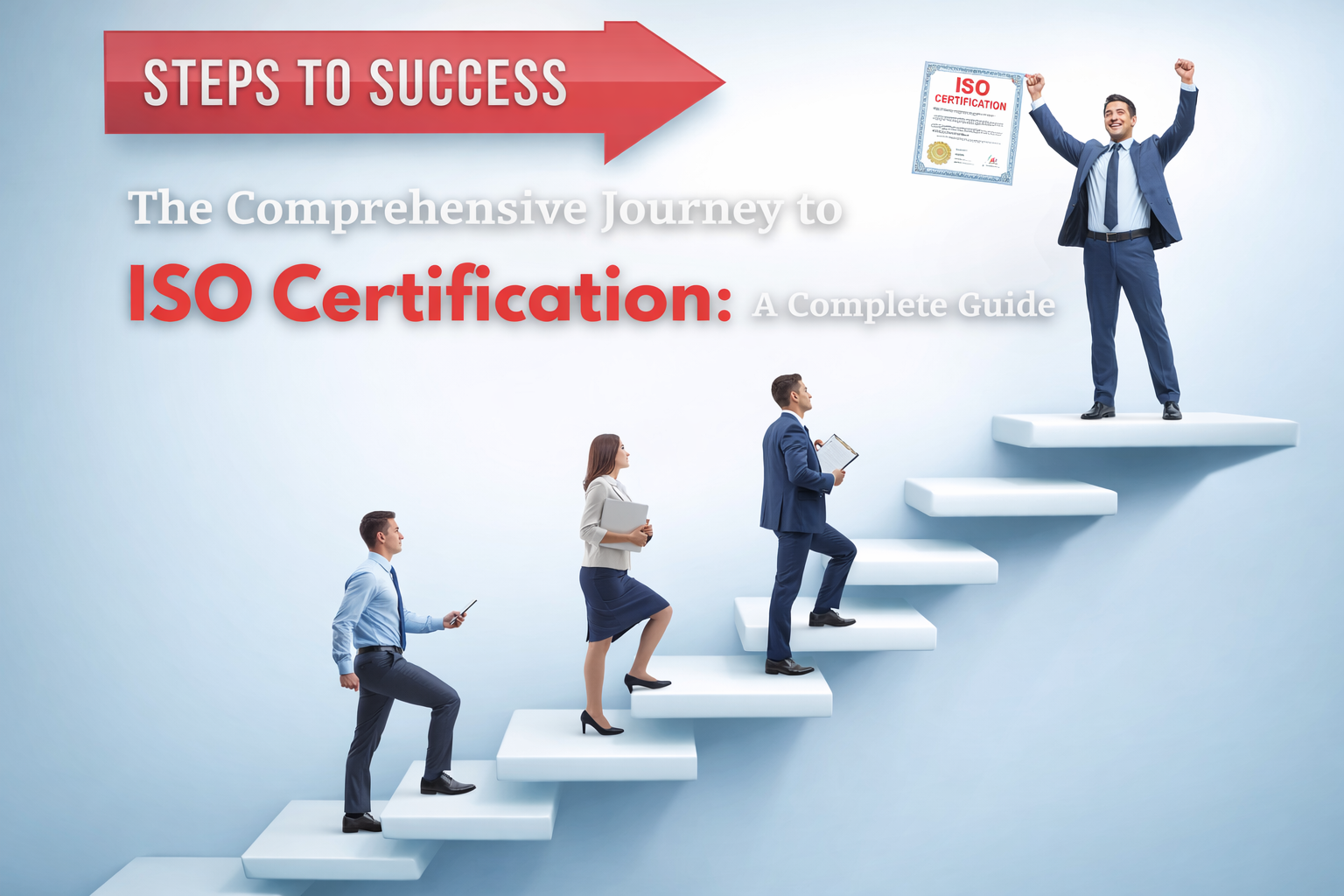
The Comprehensive Journey to ISO Certification: A Complete Guide
In today’s competitive business environment, achieving ISO Certification is more than just a badge—it is a proven pathway to greater trust, quality, efficiency, and compliance. Whether your organization is pursuing ISO 9001, ISO 14001, ISO 45001, ISO 27001 or any other ISO Standard, understanding the structured journey toward certification is crucial. This step-by-step guide walks you through everything from initial awareness to certification issuance and beyond, including internal and external audits by an accredited certification body.
Understanding ISO and ISO Certification
ISO stands for the International Organization for Standardization, an independent body that develops voluntary international standards for processes, products, and systems across industries. These standards provide best practices and frameworks that help organizations manage quality, environmental responsibilities, safety, and information security among many other functions.
Some of the most widely implemented standards include:
- ISO 9001 – Quality Management System (QMS)
- ISO 14001 – Environmental Management System (EMS)
- ISO 45001 – Occupational Health & Safety Management System (OHSMS)
- ISO 27001 – Information Security Management System (ISMS)
An ISO management system focuses on establishing consistent procedures and continual improvement rather than sporadic compliance. Achieving ISO Certification demonstrates that your organization’s processes meet all required norms and are effective in implementation.
Certification is granted only after a thorough review and audit by an accredited certification body, which is an independent third party authorized to assess compliance with ISO standards.
Why ISO Certification Matters
ISO Certification offers tangible benefits across an organization:
• Enhanced Credibility and Market Reputation
A certified ISO management system sends a clear message to clients, partners, and regulators that your organization adheres to internationally recognized standards.
• Continuous Improvement and Operational Efficiency
Standards such as ISO 9001 emphasize process measurement and improvement cycles (Plan‑Do‑Check‑Act), which drive consistency and efficiency.
• Increased Customer Satisfaction
ISO 9001, in particular, focuses on understanding customer needs and monitoring satisfaction — helping deliver better products and services.
• Compliance with Legal and Environmental Responsibilities
ISO 14001 helps businesses minimize environmental impact while meeting regulatory expectations.
• Stronger Safety and Security Posture
ISO 45001 and ISO 27001 strengthen occupational safety and information security, respectively, reducing risks to people and data.
These benefits contribute to sustainability, profitability, and global competitiveness.
The Step‑by‑Step ISO Certification Journey
Achieving ISO Certification isn’t a single event — it’s a structured journey that includes planning, documentation, implementation, and auditing.
Step 1: Choose the Right ISO Standard
The very first step is deciding which ISO Standard aligns with your business objectives. Is your focus on quality improvement? ISO 9001 may be the choice. Is data security at the forefront? ISO 27001 might suit your needs. Each standard focuses on a specific part of your organizational ecosystem.
During this stage, it’s wise to:
- Research each standard’s purpose and requirements
- Conduct initial training for key personnel
- Consider whether to engage an ISO consultant for guidance
Step 2: Perform a Gap Analysis
Once a standard is chosen, perform a gap analysis to compare your current processes against the requirements of that ISO Standard. This step uncovers where your systems already align and where improvements are needed.
Key activities include:
- Reviewing existing documentation
- Interviewing staff to understand current practices
- Mapping current system processes against standard requirements
This analysis helps create a realistic and cost‑effective implementation plan.
Step 3: Develop Your ISO Management System
Based on the gap analysis results, your next task is to build and document your ISO management system. This means:
- Drafting procedures and policies aligned with the chosen ISO Standard
- Defining roles and responsibilities
- Documenting work instructions
- Establishing measurable objectives and performance indicators
Documentation lays the foundation for consistent operations and serves as evidence during audits.
Step 4: Implement the System
Documentation alone isn’t enough. The next stage is effective implementation throughout your organization. This includes:
- Training employees on their ISO roles and responsibilities
- Rolling out new procedures and monitoring adherence
- Collecting records to show system activity and effectiveness
For example, under ISO 9001, processes like quality checks, feedback mechanisms, and corrective action plans must be in place and functioning.
Step 5: Conduct Internal Audits
Before an external audit, organizations must perform internal audits to test implementation. Internal audits help:
- Identify compliance gaps
- Uncover process weaknesses
- Provide corrective actions before certification audits
Internal audits should be objective and thorough, with a focus on actual adherence to documented processes rather than checklist compliance.
Step 6: Management Review
Following internal audits, top management must conduct a management review. This formal review assesses the ISO management system’s performance against organizational objectives, taking corrective actions where needed.
This step demonstrates leadership involvement, which is a critical requirement in standards like ISO 9001 and ISO 14001.
Step 7: Select an Accredited Certification Body
Now it’s time to choose the right accredited certification body. An accredited body is recognized by national or international accreditation forums to provide credible, impartial certification.
Before signing contracts:
- Verify accreditation status
- Check industries and standards they specialize in
- Ask for references or past audit samples
Step 8: Certification Audit — Stage 1 (Documentation Review)
Once the certification body is chosen, the certification audit begins. The first phase, commonly called Stage 1 or documentation review, involves auditors checking whether your documented ISO management system meets the standard’s requirements.
Auditors review:
- Policies and procedures
- Quality manuals
- Records and previous audit findings
This stage ensures readiness for the next step.
Step 9: Certification Audit — Stage 2 (On‑Site Audit)
After Stage 1 is successful, your organization will undergo Stage 2, where auditors conduct an external audit on site. They will:
- Observe process operations
- Interview staff
- Check records and implementation effectiveness
Auditors identify non‑conformities — discrepancies between what’s required by the ISO Standard and what exists in practice.
Step 10: Address Non‑Conformities and Final Review
If non‑conformities are found, your team must take corrective action and provide evidence to the auditors. Once resolved, the certification body conducts a final review. When all requirements are met, your organization will be recommended for certification.
Step 11: Certification Issuance
Upon successful completion, the accredited certification body issues the ISO certificate, which is typically valid for three years.
This certificate proves that your organization’s ISO management system meets international standards.
Step 12: Surveillance Audits and Continuous Improvement
ISO certification is not the end — it’s a commitment to ongoing performance. Most certifications require annual surveillance audits by the same certification body to ensure continual compliance.
At the end of the certification cycle, a recertification audit is conducted to renew your certification for another three‑year term.
4. How ISO Audits Work
ISO audits are an essential part of certification and compliance. They assess if a management system meets the chosen ISO Standard and how effectively it is implemented within the organization.
Internal Audit
Internal audits are conducted by trained internal auditors and help prepare for certification audits by identifying internal compliance gaps.
External Audit
External audits are conducted by an accredited auditor from a certification body. These audits assess your system’s adherence to the ISO Standard and form the basis for certification decisions.
Frequently Asked Questions (FAQs) About ISO Certification
1. What is ISO Certification?
ISO Certification is official recognition that an organization’s management system meets the requirements of a specific ISO Standard (such as ISO 9001, ISO 14001, ISO 45001, ISO 27001) and has successfully passed evaluation by an accredited third-party certification body. (Investopedia)
2. How long does ISO Certification take?
The timeline for ISO Certification varies by organization size and preparedness, but it usually takes approximately 3 to 12 months from initial planning through external audit and certification. (isoindia.iqsb.org)
3. What is an ISO Standard?
An ISO Standard is an internationally accepted set of requirements designed to ensure quality, safety, efficiency, environmental stewardship, or information security within an organization’s processes. (Investopedia)
4. Do all companies need ISO Certification?
ISO Certification is not legally required, but it significantly enhances credibility, quality, compliance, and competitiveness in many industries. (СМАРТ СЕРТИФИКЕЙШЪН)
5. What is ISO 9001?
ISO 9001 is an internationally recognized standard for a Quality Management System (QMS), focused on meeting customer needs and continual improvement. (Investopedia)
6. What is ISO 14001?
ISO 14001 is a widely adopted standard for Environmental Management Systems (EMS) that helps organizations reduce environmental impact and meet regulatory requirements. (СМАРТ СЕРТИФИКЕЙШЪН)
7. What is ISO 45001?
ISO 45001 is the international standard for Occupational Health and Safety Management Systems (OHSMS) designed to reduce workplace hazards and protect employee safety. (Wikipedia)
8. What is ISO 27001?
ISO 27001 is the standard for an Information Security Management System (ISMS). It helps organizations protect sensitive information through risk-based controls and certified processes. (Wikipedia)
9. What is a certification audit?
A certification audit is an on-site evaluation conducted by a third-party certification body to verify that your management system complies with the ISO Standard requirements. (isoindia.iqsb.org)
10. What is an accredited certification body?
An accredited certification body is an independent organization recognized by national or international accreditation forums to carry out ISO assessments and issue certificates. (ISO)
11. What is an external audit?
An external audit is performed by auditors from a certified body (not internal to the company) to assess whether the ISO management system meets the standard and is operating effectively. (isoindia.iqsb.org)
12. What happens if non-conformities are found?
Non-conformities identified during a certification or surveillance audit must be addressed with corrective actions and evidence submitted; once resolved, certification can proceed. (isoindia.org.in)
13. How valid is an ISO certificate?
Most ISO certificates (including ISO 9001, ISO 14001, ISO 45001, and ISO 27001) are valid for three years, with periodic surveillance audits required annually. (Online ISO)
14. Can ISO Certification improve business performance?
Yes — an effective ISO management system improves internal processes, enhances quality, reduces risk, and improves compliance and customer satisfaction. (СМАРТ СЕРТИФИКЕЙШЪН)
15. Can multiple ISO Standards be integrated?
Yes — companies often integrate multiple standards (e.g., ISO 9001, ISO 14001, ISO 45001) into a single ISO management system for streamlined compliance and combined audits. (Wikipedia)