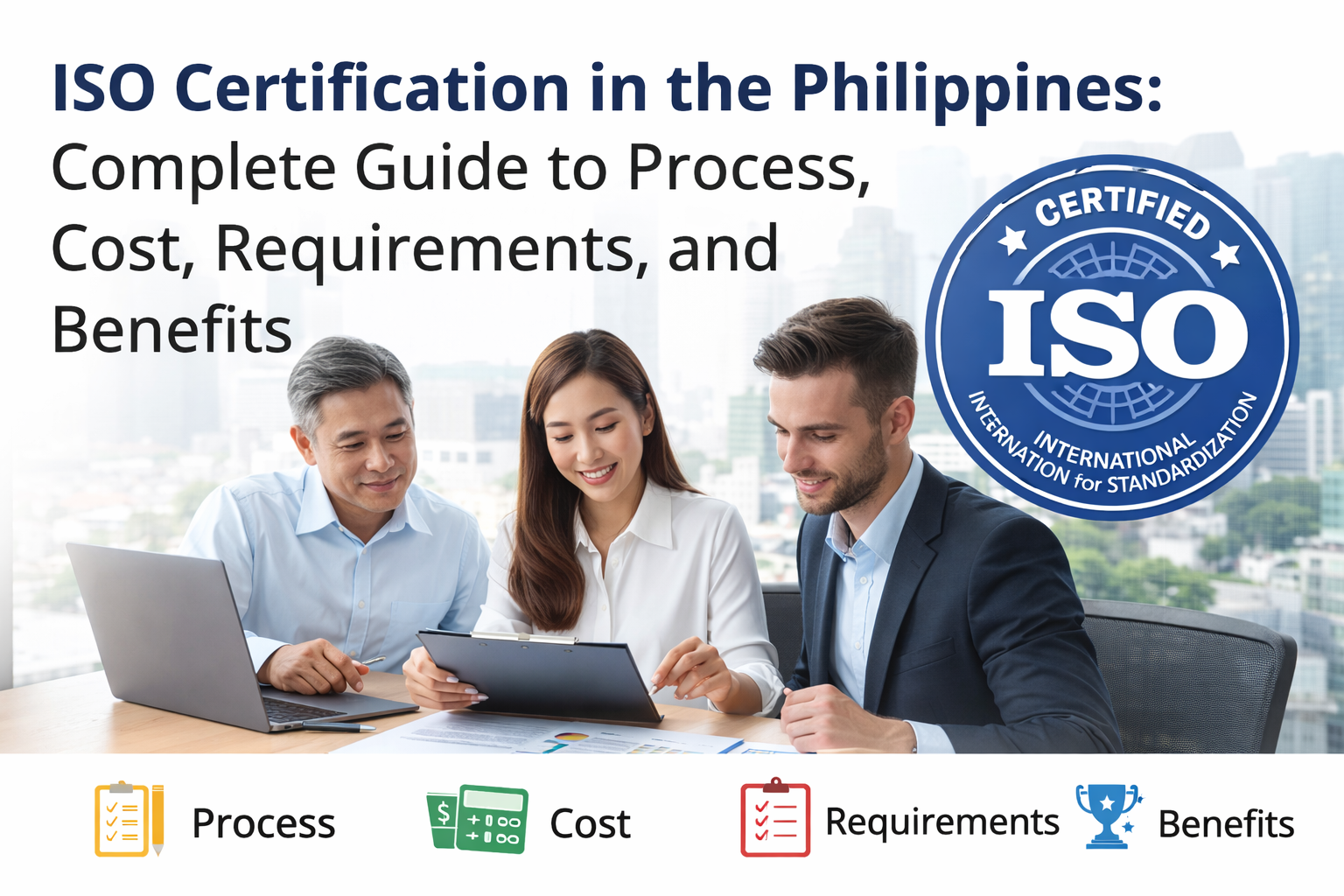
ISO Certification in the Philippines: Complete Guide to Process, Cost, Requirements, and Benefits
In today’s competitive global market, businesses in the Philippines are increasingly turning to ISO standards to improve credibility, efficiency, and customer trust. Whether you are a startup, SME, or large enterprise, obtaining ISO certification in the Philippines can open doors to new opportunities, both locally and internationally.
From quality and environmental management to information security, ISO standards help organizations operate in a structured, compliant, and efficient manner. This guide explains everything you need to know about ISO certification in the Philippines, including the process, cost, requirements, and popular standards like ISO 27001 certification and ISO 14001 certification.
What is ISO Certification?
ISO certification is an official recognition that a company follows internationally accepted management standards developed by the International Organization for Standardization (ISO). These standards ensure that businesses meet quality, safety, environmental, or information security requirements.
An ISO certificate Philippines is issued by an accredited certification body after the organization successfully passes an external audit.
ISO certification is not limited to any one industry. It is applicable to:
- Manufacturing companies
- IT and software firms
- Healthcare organizations
- Construction companies
- Educational institutions
- Service providers
- Government contractors
Why ISO Certification Matters for Businesses in the Philippines
Obtaining ISO certification in the Philippines offers both operational and market advantages.
Key Benefits
- Improved credibility and trust
- Better operational efficiency
- Higher customer satisfaction
- Access to international markets
- Eligibility for tenders and contracts
- Stronger risk management systems
Studies of certified companies show improvements in efficiency, reduced waste, and increased sales after certification.
Popular ISO Standards in the Philippines
Businesses choose ISO standards based on their industry, risks, and goals. The most commonly adopted certifications include:
1. ISO 9001 – Quality Management System
- Focuses on product and service quality
- Improves customer satisfaction
- Suitable for all industries
2. ISO 14001 Certification – Environmental Management
ISO 14001 certification helps organizations reduce environmental impact and comply with environmental regulations.
It is ideal for:
- Manufacturing units
- Construction companies
- Logistics providers
- Energy and industrial firms
3. ISO 27001 Certification – Information Security
ISO 27001 certification focuses on protecting sensitive business and customer data.
It is widely used by:
- IT companies
- Fintech and banking firms
- BPO and outsourcing companies
- E-commerce businesses
ISO Certification Process in the Philippines
The ISO certification process in the Philippines generally follows a structured path. Most organizations complete certification within 3 to 12 months, depending on size and complexity.
Step-by-Step Process
Step 1: Gap Analysis
A gap analysis compares current processes with ISO standard requirements to identify areas that need improvement.
Step 2: Planning and Documentation
The organization prepares:
- Policies
- Procedures
- Manuals
- Standard operating procedures (SOPs)
Proper documentation is essential for compliance.
Step 3: Implementation
The company implements the documented processes across departments and trains employees.
Step 4: Internal Audit
An internal audit checks whether the system is working effectively and meeting ISO requirements.
Step 5: Management Review
Top management reviews the audit findings and takes corrective actions if required.
Step 6: External Certification Audit
An accredited certification body conducts:
- Stage 1 Audit: Documentation review
- Stage 2 Audit: On-site assessment
If successful, the company receives the ISO certificate Philippines.
Step 7: Surveillance Audits
Annual audits are conducted to maintain certification.
ISO Certification Requirements in the Philippines
The ISO certification requirements in the Philippines are similar to global ISO standards.
Basic Requirements
- Business registration and legal status
- Defined management system (quality, environment, or security)
- Documented policies and procedures
- Employee training programs
- Internal audit system
- Management review process
Organizations must maintain records, process flowcharts, and SOPs as part of their compliance.
ISO Registration Philippines: Who Can Apply?
The ISO registration Philippines process is open to:
- Sole proprietorships
- Partnerships
- Corporations
- NGOs
- Government agencies
- Educational institutions
There is no minimum turnover or employee requirement for ISO certification.
ISO Certification Cost in the Philippines
The ISO certification cost in the Philippines depends on:
- Company size
- Number of employees
- Number of locations
- Type of ISO standard
- Complexity of operations
Average Cost Estimates
For a mid-sized company:
- Typical ISO certification project: PHP 400,000 – 600,000
Consulting and audit services:
- Around PHP 30,000 – 40,000 per man-day
Annual surveillance audits:
- Approximately PHP 75,000 per year
ISO 27001 Certification Cost in the Philippines
For organizations seeking ISO 27001 certification, the cost is usually higher because of technical security controls.
Typical estimates:
- Training: around PHP 100,000
- Consulting: PHP 300,000 – 600,000
- Certification audit: PHP 300,000 – 800,000
- Total estimated cost: PHP 780,000 – 1,300,000
The exact cost depends on:
- Data sensitivity
- IT infrastructure
- Security risks
- Number of employees and locations
ISO 14001 Certification Cost in the Philippines
The cost of ISO 14001 certification is usually similar to ISO 9001, depending on environmental risks.
Typical expenses include:
- Gap analysis
- Documentation
- Training
- Internal audits
- Certification audit
Many organizations budget between PHP 400,000 and 600,000 for a full ISO project.
Time Required for ISO Certification
The time required for ISO certification Philippines depends on company size and readiness.
Typical timelines:
- Small companies: 3–4 months
- Medium-sized companies: 4–6 months
- Large or complex organizations: up to 12 months
Documents Required for ISO Certification
The documentation requirements vary by standard, but typically include:
Common Documents
- Company registration documents
- Quality or environmental policy
- Process flowcharts
- SOPs and work instructions
- Training records
- Internal audit reports
- Management review records
Proper documentation is essential for passing certification audits.
Industries That Need ISO Certification in the Philippines
ISO certification is especially useful for:
- IT and software companies
- Manufacturing industries
- Construction firms
- Export-oriented businesses
- Logistics and transport companies
- Healthcare providers
- Food processing units
- BPO and outsourcing companies
For example, ISO 27001 certification is crucial for IT and BPO firms handling sensitive client data, while ISO 14001 certification is ideal for manufacturing and industrial companies.
Key Factors That Affect ISO Certification Cost
Several factors influence the ISO certification cost in the Philippines:
- Number of employees
- Type of ISO standard
- Number of business locations
- Level of documentation required
- Training needs
- Consultant involvement
Projects with complex operations or multiple locations usually require more audit time and higher costs.
Tips to Get ISO Certification Faster
If you want to speed up the ISO registration process:
- Conduct a proper gap analysis first
- Assign a dedicated ISO coordinator
- Train employees early
- Keep documentation organized
- Choose an experienced consultant
Many companies complete certification faster by implementing systems in phases.
How Long is an ISO Certificate Valid?
An ISO certificate in the Philippines is usually valid for three years.
However:
- Annual surveillance audits are required
- A recertification audit is needed after three years
Is ISO Certification Mandatory in the Philippines?
ISO certification is not legally mandatory for most businesses.
However, it may be required for:
- Government tenders
- International contracts
- Export-related industries
- Large corporate supply chains
Many organizations adopt ISO standards voluntarily to improve competitiveness.
Return on Investment (ROI) of ISO Certification
ISO certification is not just a compliance tool—it also brings measurable financial benefits.
Companies in the Philippines have reported:
- 15–20% increase in sales
- Around 3.5% reduction in operational costs
- Payback period of 18–24 months
These improvements come from better processes, fewer errors, and stronger customer confidence.
Conclusion
Obtaining ISO certification in the Philippines is a smart investment for any organization aiming to improve quality, security, and environmental performance. Whether you choose ISO 27001 certification for information security or ISO 14001 certification for environmental management, ISO standards help businesses become more efficient, credible, and competitive.
With clear processes, reasonable costs, and strong long-term benefits, ISO certification in the Philippines is becoming a key requirement for companies that want to grow in both local and international markets.