5,000+ Certifications Issued 4.8/5 Rating (2,100+ Reviews) IAF Accredited Body
+91 98765 43210 | WhatsApp Now | Mon–Sat 9AM–7PM
Call WhatsApp Apply Free
ISO 9001

ISO 9001 Certification: Benefits, Requirements & Quality Management System (QMS) Guide

Updated 744 views
ISO 9001 Certification: Benefits, Requirements & Quality Management System (QMS) Guide iso 9001 certification 2026 | ISORegistration.grih.in
Table of Contents

In today’s fast-paced market, quality isn’t just an option — it’s a necessity. Customers expect products and services that meet their needs consistently, and even a single mistake can harm your reputation.

This is where ISO 9001 certification comes in. Think of it as a blueprint for business excellence, helping organizations of all sizes streamline operations, improve quality, and boost customer trust.

Whether you’re a startup trying to make a mark or a large enterprise aiming to maintain your competitive edge, ISO 9001 can transform your business. But what exactly makes it so valuable? Let’s dive into the top reasons why you need ISO 9001 certification — and how it can elevate your business.

The  Problems ISO 9001 Certification Solves

Without a structured ISO 9001 quality management system, businesses can face serious challenges. Products and services may be inconsistent, errors can go unaddressed, and customer expectations may be repeatedly unmet. This often leads to wasted resources, rising ISO 9001 cost, and even safety risks in critical industries. For instance, in healthcare, poor quality controls could result in mistakes that compromise patient safety.

ISO 9001 provides a proven framework to tackle these challenges. By implementing its principles, organizations can ensure their products and services are reliable, safe, and of high quality. At the same time, it promotes efficiency, accountability, and continuous improvement, helping businesses reduce waste, prevent errors, and build trust with customers.

In essence, ISO 9001 turns quality management from an afterthought into a strategic advantage, solving operational inefficiencies while enhancing customer satisfaction and business credibility.

12 Key Benefits of ISO 9001 Certification for Business

1. Enhances Product and Service Quality

A primary reason to obtain ISO 9001 certification is its direct impact on the quality of your products and services. By implementing a strong quality management system (QMS), businesses can reduce defects, improve consistency, and enhance customer satisfaction.

2. Increases Customer Satisfaction and Loyalty

ISO 9001 certification ensures that your organizational processes align with customer expectations. By focusing on feedback and needs, your business can improve satisfaction, encourage repeat business, and strengthen loyalty.

3. Builds Credibility and Market Reputation

Achieving ISO 9001 certification demonstrates your commitment to quality, efficiency, and continuous improvement. It enhances your credibility with clients, partners, investors, and regulators, giving you a competitive edge in your industry.

4. Streamlines Internal Processes and Reduces Waste

ISO 9001 requires organizations to analyze and optimize their processes, uncover inefficiencies, and reduce operational waste. Streamlined workflows lead to higher productivity, lower costs, and improved output reliability.

5. Encourages Evidence-Based Decision Making

ISO 9001 emphasizes data-driven decision-making. By gathering and analyzing performance data, businesses can make objective decisions, reduce errors, and implement corrective actions efficiently.

6. Improves Employee Engagement and Accountability

ISO 9001 clearly defines roles, responsibilities, and quality objectives, which helps employees understand their impact. Engaged employees participate in improvement initiatives, collaborate better, and take ownership of their work.

7. Minimizes Risks Through Proactive Risk Management

ISO 9001:2015 promotes risk-based thinking, helping organizations identify potential problems before they occur. This proactive approach reduces disruption, avoids costly mistakes, and strengthens business resilience.

8. Provides Better Access to Government and Corporate Contracts

Many organizations require ISO 9001 certification for vendor eligibility. Certification helps your business qualify for government tenders, large corporate contracts, and international opportunities, opening doors to growth.

9. Drives Continuous Improvement Across the Organization

ISO 9001 fosters a culture of continuous improvement through the PDCA (Plan-Do-Check-Act) cycle. Organizations regularly refine processes, respond to feedback, and stay competitive and future-ready.

10. Creates a Foundation for Other ISO Certifications

A solid ISO 9001 system makes it easier to pursue other ISO certifications, such as:

  • ISO 14001 – Environmental Management
     
  • ISO 27001 – Information Security Management
     
  • ISO 45001 – Occupational Health and Safety
     
  • ISO 13485 – Medical Devices Quality


Its harmonized structure simplifies ISO 9001 compliance and integration across multiple standards.

11. Enhances Supplier and Partner Trust

ISO 9001 impacts supply chain and partnership operations. Standardized processes and transparent quality practices help create stronger collaborations, reliable deliveries, and aligned expectations with suppliers and partners.

12. Strengthens Regulatory Compliance

Many industries have strict regulations for safety, documentation, and traceability. ISO 9001 ensures businesses maintain compliance, reduce legal risks, and operate ethically, which protects both your reputation and customers.

Future Outlook: ISO 9001 in the Coming Years

ISO 9001 continues to evolve in response to digital transformation, sustainability, and global stanISO 9001 standard alignment. Businesses adopting ISO 9001 will not only stay competitive but also be well-positioned for:

  • Integration with Industry 4.0 and automation technologies
     
  • Compliance with environmental and ethical standards
     
  • Streamlined adoption of multi-standard ISO certifications
     
  • Improved resilience in global markets

Conclusion — The Big Picture: Why ISO 9001 Certification Is Essential in 2026

ISO 9001 certification delivers far more than just a compliance tick — it creates a quality‑focused, efficient, competitive, and trusted organization. From internal improvements and better customer satisfaction to global market access and stronger brand trust, the benefits are comprehensive and future‑proof.

Investing in ISO 9001 positions your business for long‑term growth, operational excellence, and sustainable success — giving you the edge required in today’s dynamic market.

Frequently Asked Questions (FAQs) About ISO 9001 Certification

1. What is ISO 9001 certification?
 ISO 9001 is a globally recognized standard for ISO 9001 quality management Systems (QMS) that helps organizations consistently deliver high-quality products and services.

2. Why is ISO 9001 important for businesses?
 It ensures consistent quality, improves efficiency, boosts customer satisfaction, and enhances credibility in both local and international markets.

3. Who can get ISO 9001 certified?
 Any organization, regardless of size or industry, can implement ISO 9001 and achieve certification — from startups to multinational corporations.

4. How long does it take to become ISO 9001 certified?
 The timeline varies based on company size, complexity, and readiness. Typically, it takes 3–6 months for most organizations.

5. Is ISO 9001 certification mandatory?
 No, it’s voluntary. However, many clients, suppliers, and government tenders require it, making it a strategic business advantage.

6. What are the main benefits of ISO 9001 certification?
 Key benefits include improved product quality, higher customer satisfaction, streamlined processes, risk management, and increased market opportunities.

7. How much does ISO 9001 certification cost?
 Costs depend on the organization’s size, complexity, and whether you hire a consultant. While there is an upfront investment, the long-term gains in efficiency and credibility outweigh the cost.

8. How does ISO 9001 improve customer satisfaction?
 By standardizing processes and focusing on feedback, ISO 9001 ensures that products and services consistently meet customer expectations.

9. Can ISO 9001 certification help in getting government contracts?
 Yes, many government and corporate tenders require ISO 9001 certification as a prerequisite for eligibility.

10. Does ISO 9001 apply to service-based companies?
 Absolutely. ISO 9001 applies to both product-based and service-based businesses across all industries.

11. How does ISO 9001 support employee engagement?
 It clarifies roles and responsibilities, sets quality objectives, and involves employees in continuous improvement, boosting motivation and accountability.

12. How often do I need to renew ISO 9001 certification?
 ISO 9001 certification is typically valid for three years, with periodic surveillance ISO 9001 audit
 to ensure continued compliance.

13. Can ISO 9001 be integrated with other ISO standards?
 Yes. ISO 9001 provides a foundation for standards like ISO 14001 (Environmental Management), ISO 45001 (Occupational Health & Safety), and ISO 27001 (Information Security).

14. What is the difference between ISO 9001 and ISO 9000?
 ISO 9000 provides the fundamentals and terminology for quality management systems, while ISO 9001 specifies the ISO 9001 requirements for implementing an effective QMS.

15. How does ISO 9001 help future-proof a business?
 It encourages continuous improvement, risk management, and process optimization, enabling businesses to adapt to technological advances, market changes, and regulatory updates.
 

Frequently Asked Questions

Frequently Asked Questions (FAQ)

What is ISO 9001 certification?

ISO 9001 certification signifies that an organization meets the requirements for a Quality Management System (QMS) as defined by ISO 9001:2015. It focuses on customer satisfaction and continuous improvement, ensuring consistent quality of products and services. The standard is globally recognized and applicable to organizations of any size or industry. (ISO 9001:2015)

Why is ISO 9001 essential for Indian businesses in 2026?

ISO 9001 is essential for Indian businesses to enhance competitiveness, meet global quality benchmarks, and access new markets, especially for exports. It improves operational efficiency, reduces waste, and boosts customer trust. With increasing focus on 'Make in India' and global supply chains, it remains a critical differentiator for 2026 and beyond. (Make in India initiative / ISO 9001:2015)

What are the key principles of ISO 9001:2015?

ISO 9001:2015 is based on seven key quality management principles: customer focus, leadership, engagement of people, process approach, improvement, evidence-based decision making, and relationship management. These principles guide organizations in establishing an effective QMS focused on consistent quality and stakeholder satisfaction. (ISO 9001:2015)

What is the scope of ISO 9001 certification?

The scope of ISO 9001 certification encompasses an organization's entire Quality Management System, covering all processes relevant to product or service delivery. It requires defining the organization's context (Cl. 4.1), understanding interested parties (Cl. 4.2), and establishing the scope of the QMS (Cl. 4.3). This ensures the QMS addresses all relevant internal and external issues. (ISO 9001:2015 Clause 4)

How does ISO 9001 benefit business growth and customer satisfaction?

ISO 9001 significantly benefits business growth by enhancing operational efficiency, reducing errors, and improving product/service quality, leading to cost savings. It boosts customer satisfaction by ensuring consistent delivery of quality products and services that meet requirements, fostering loyalty and positive reputation, which are crucial for growth. (ISO 9001:2015)

Can ISO 9001 certification help in securing government tenders in India?

Yes, ISO 9001 certification often helps in securing government tenders in India. Many government procurement portals, like the Government e-Marketplace (GeM), and various PSUs, specify ISO 9001 as a mandatory or preferred requirement for bidders, indicating a commitment to quality and process reliability. This can provide a competitive edge. (GeM Portal / Ministry of MSME)

What is the current status of the ISO 9001:2015 standard?

ISO 9001:2015 is the current and active version of the Quality Management System standard. It was published in 2015 and remains fully valid. ISO periodically reviews its standards, typically every five years, but no new revision for ISO 9001 has been published or officially announced as of early 2024 for immediate release in 2025-2026. (ISO.org)

Which types of organizations can get ISO 9001 certified in India?

ISO 9001 is a generic standard applicable to all types of organizations in India, regardless of their size, sector, or nature of business. This includes manufacturing units, service providers (IT, healthcare, education), government bodies, NGOs, and startups. Its principles are universally adaptable to improve quality management. (ISO 9001:2015)

Is ISO 9001 certification mandatory for MSMEs in India?

ISO 9001 certification is not mandatory for all MSMEs in India by default. However, it is often a requirement for specific government tenders, export markets, or to qualify as a supplier for larger corporations. Obtaining it can also provide MSMEs with significant competitive advantages, improved efficiency, and access to subsidies. (Ministry of MSME)

How does ISO 9001 apply to both manufacturing and service industries?

ISO 9001 applies to both manufacturing and service industries by focusing on process management rather than specific outputs. For manufacturing, it ensures consistent product quality, while for services, it guarantees consistent service delivery and customer experience. The standard's generic clauses, like Cl. 8.1 (Operational Planning and Control), are adaptable to various operational contexts. (ISO 9001:2015 Clause 8.1)

Does ISO 9001 certification help Indian companies with exports?

Yes, ISO 9001 certification significantly helps Indian companies with exports. Many international buyers and regulatory bodies require suppliers to be ISO 9001 certified, as it demonstrates adherence to internationally recognized quality standards. It enhances credibility, opens doors to global markets, and streamlines compliance with import regulations, boosting India's export potential. (DGFT (Directorate General of Foreign Trade))

Can startups benefit from ISO 9001 certification in India?

Yes, startups in India can greatly benefit from ISO 9001 certification. It helps establish robust processes from an early stage, build credibility with investors and customers, and lay a strong foundation for scalable growth. While not mandatory, it demonstrates commitment to quality, which is crucial for market entry and competitive differentiation. (Startup India)

What is the step-by-step process for ISO 9001 certification in India?

The ISO 9001 certification process in India typically involves: 1) Gap analysis, 2) QMS documentation and implementation, 3) Internal audits, 4) Management review, 5) Selection of an accredited Certification Body (CB), 6) Stage 1 audit (document review), 7) Stage 2 audit (on-site assessment), and 8) Certification decision and issuance. Ongoing surveillance audits follow. (NABCB Accreditation Criteria)

What are the mandatory documentation requirements for ISO 9001:2015?

ISO 9001:2015 requires organizations to maintain documented information related to the scope of the QMS (Cl. 4.3), quality policy (Cl. 5.2), quality objectives (Cl. 6.2), and evidence of conformity of products/services (Cl. 7.5.1). While specific procedures are not mandated, the QMS must include information deemed necessary for its effectiveness and control. (ISO 9001:2015 Clause 7.5)

How long does it typically take to get ISO 9001 certified in India?

The timeline for ISO 9001 certification in India typically ranges from 3 to 12 months, depending on the organization's size, complexity, existing processes, and resource availability. Small organizations with established practices might achieve it faster, while larger, complex entities may take longer to implement and refine their QMS. (QCI India)

What is a GAP analysis in the ISO 9001 certification process?

A GAP analysis is the initial step in the ISO 9001 certification process, where an organization's existing Quality Management System is compared against the requirements of ISO 9001:2015. It identifies discrepancies or 'gaps' that need to be addressed to achieve compliance. This forms the basis for the implementation plan. (ISO 9001:2015)

What is the difference between Stage 1 and Stage 2 ISO 9001 audits?

A Stage 1 audit (readiness review) assesses the adequacy of the QMS documentation, confirms scope, and evaluates preparedness for the Stage 2 audit. A Stage 2 audit (main assessment) evaluates the implementation and effectiveness of the QMS in practice, including process reviews, interviews, and record verification, to determine compliance with ISO 9001:2015. (NABCB AC2001 - Requirements for Bodies Providing Audit and Certification of Management Systems)

What role does risk-based thinking play in ISO 9001:2015?

Risk-based thinking is fundamental to ISO 9001:2015 (Cl. 6.1), requiring organizations to identify, analyze, and address risks and opportunities that could affect the QMS's ability to achieve its intended results. This proactive approach helps prevent undesirable outcomes, ensures the QMS is effective, and promotes continuous improvement. (ISO 9001:2015 Clause 6.1)

How are documented information and records managed under ISO 9001 Clause 7.5?

ISO 9001 Clause 7.5 requires organizations to control documented information deemed necessary for the QMS's effectiveness. This includes ensuring information is available, suitable for use, protected, and controlled for distribution, access, retrieval, use, storage, and retention. Records provide evidence of conformity to requirements and effective QMS operation. (ISO 9001:2015 Clause 7.5)

What is the significance of the Management Review (Clause 9.3) in ISO 9001?

The Management Review (Clause 9.3) is critical in ISO 9001 as it ensures top management regularly assesses the QMS's continuing suitability, adequacy, effectiveness, and alignment with the organization's strategic direction. This review considers audit results, customer feedback, process performance, and nonconformities to drive necessary improvements. (ISO 9001:2015 Clause 9.3)

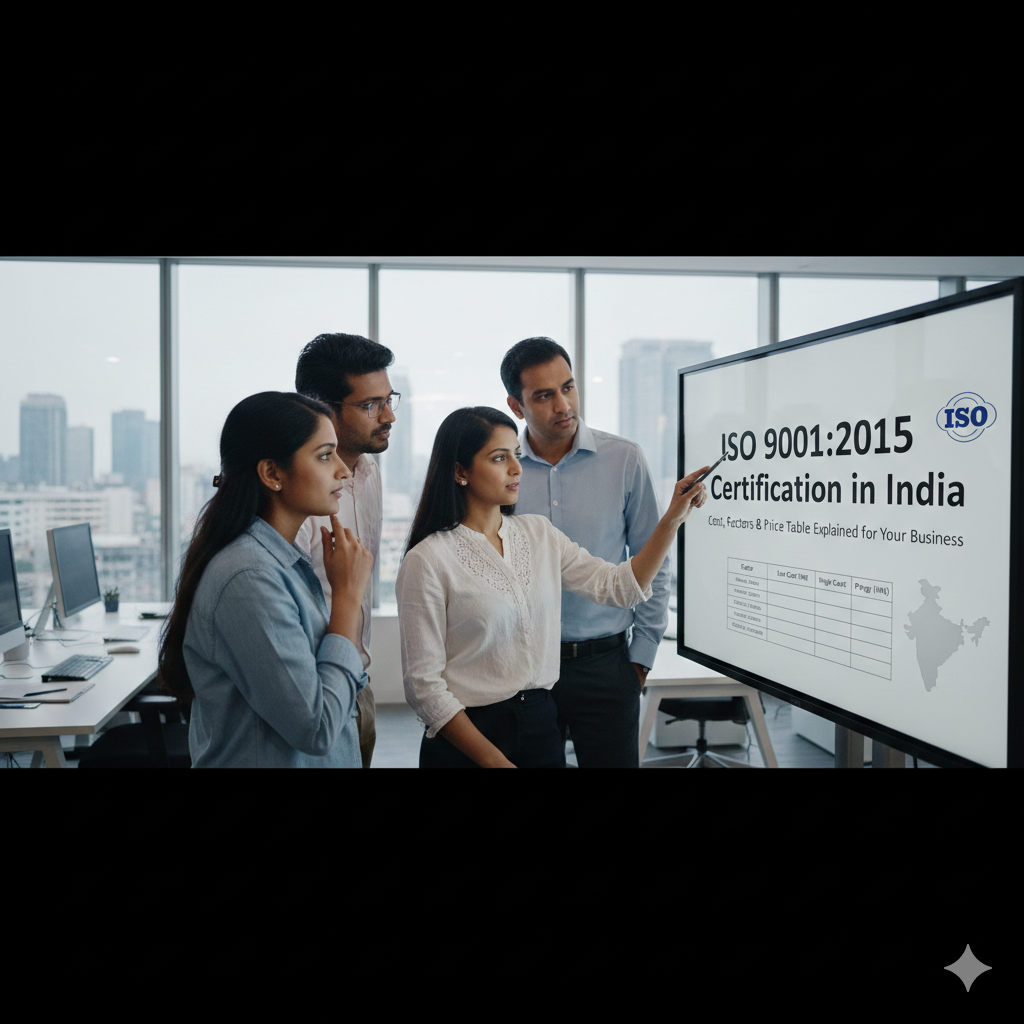
What is the estimated cost of ISO 9001 certification in India?

The estimated cost of ISO 9001 certification in India varies widely, typically ranging from INR 25,000 to INR 2,00,000 or more. Factors like organization size, number of employees, complexity of processes, chosen certification body, and the need for consulting services significantly influence the total investment. Costs include audit fees, consultant fees, and internal resource allocation. (QCI India / NABCB)

Are there any government subsidies or schemes for ISO 9001 certification for MSMEs in India?

Yes, the Indian government offers subsidies for ISO 9001 certification, primarily through the Ministry of MSME's 'ZED (Zero Defect Zero Effect) Certification Scheme'. This scheme provides financial assistance of up to INR 75,000 for MSMEs to adopt quality management standards like ISO 9001, promoting competitiveness and quality adherence. (Ministry of MSME (ZED Scheme))

How should an Indian business select an accredited ISO 9001 certification body?

An Indian business should select an ISO 9001 certification body (CB) that is accredited by the National Accreditation Board for Certification Bodies (NABCB). Verify their accreditation scope on the NABCB website (nabcb.qci.org.in). Consider their experience in your sector, auditor competence, responsiveness, and overall value, not just cost. (NABCB (QCI India))

Why is NABCB accreditation important for ISO 9001 certification bodies in India?

NABCB accreditation for ISO 9001 certification bodies in India is crucial because it ensures the CB is competent, impartial, and operates to international standards. NABCB is India's national accreditation body and a signatory to the IAF Multilateral Recognition Arrangement (MLA), meaning certificates issued by NABCB-accredited CBs are globally accepted, enhancing credibility and market access. (NABCB (QCI India) / IAF)

What factors influence the timeline and cost of ISO 9001 certification in India?

Several factors influence the timeline and cost of ISO 9001 certification in India, including the organization's size and complexity, existing QMS maturity, number of sites, scope of certification, chosen certification body, and the need for external consulting support. Companies with robust existing processes typically achieve certification faster and at a lower cost. (QCI India)

What are common non-conformances identified during ISO 9001 audits and how can they be prevented?

Common ISO 9001 audit non-conformances include inadequate documented information (Cl. 7.5), lack of evidence for risk and opportunity assessment (Cl. 6.1), non-compliance with statutory/regulatory requirements (Cl. 4.2), and ineffective internal audits (Cl. 9.2). Prevention involves thorough planning, proper implementation, regular internal audits, and robust management reviews. (ISO 9001:2015 Clauses 6.1, 7.5, 9.2)

What happens after an organization receives its ISO 9001 certification?

After receiving ISO 9001 certification, an organization enters a three-year certification cycle. During this period, it must maintain its QMS in accordance with the standard, conduct internal audits and management reviews, and undergo annual surveillance audits by the certification body. Continuous improvement remains a key focus. (ISO/IEC 17021-1:2015)

How often are surveillance audits conducted for ISO 9001 certified organizations?

Surveillance audits for ISO 9001 certified organizations are typically conducted annually after the initial certification audit. These audits ensure the QMS remains effective, continues to meet the standard's requirements, and promotes ongoing improvement throughout the three-year certification cycle. The specific frequency is agreed upon with the certification body. (NABCB AC2001 - Requirements for Bodies Providing Audit and Certification of Management Systems)

When is recertification required for ISO 9001 and what does it involve?

ISO 9001 recertification is required every three years, at the end of the certification cycle. It involves a comprehensive audit by the certification body, similar to the initial Stage 2 audit, to ensure the QMS continues to be fully compliant and effective. This process ensures sustained commitment to quality management and continuous improvement. (ISO/IEC 17021-1:2015)

Are there any expected updates or revisions to ISO 9001:2015 for 2025-2026?

As of early 2024, there are no officially published or announced updates or revisions to ISO 9001:2015 for immediate release in 2025-2026. While ISO standards are periodically reviewed, the 2015 version remains the current and valid standard. Any future revisions would undergo a formal development process and transition period. (ISO.org)