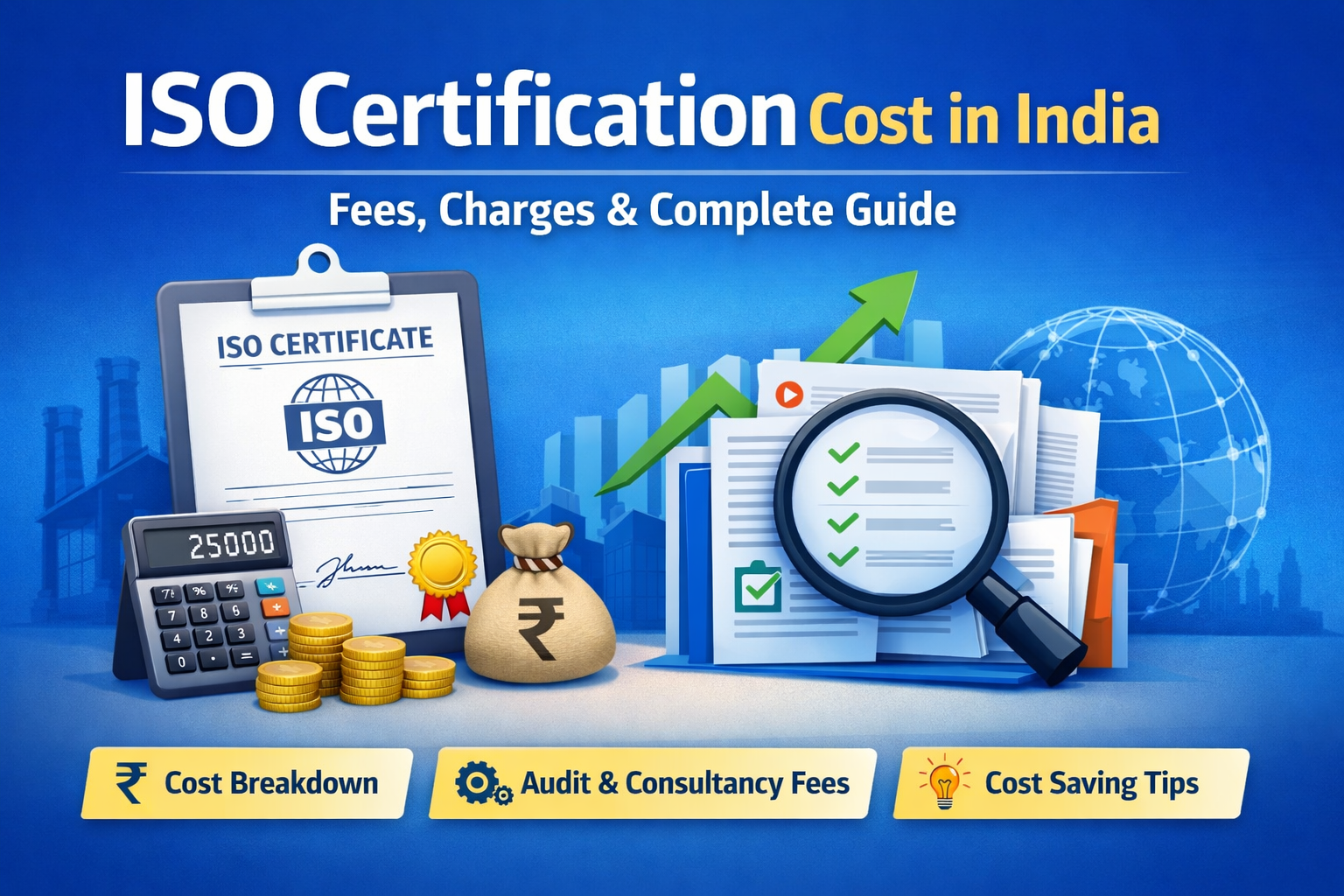
ISO certification has become an essential requirement for businesses aiming to improve quality, enhance credibility, and expand globally. Whether you are a startup, MSME, or large enterprise, obtaining ISO certification can significantly boost your business reputation. However, one of the most common questions business owners ask is: What is the cost of ISO certification in India?
In this detailed guide, we will break down everything you need to know about ISO certification cost, including fees, factors affecting pricing, and tips to reduce expenses.
What is ISO Certification?
ISO certification is an official recognition that a company complies with international standards set by the International Organization for Standardization (ISO). These standards ensure that products and services are safe, reliable, and of high quality.
Some popular ISO standards include:
-
ISO 9001 – Quality Management System
-
ISO 14001 – Environmental Management
-
ISO 27001 – Information Security
-
ISO 22000 – Food Safety
Each certification comes with its own cost structure depending on the complexity and requirements.
Average ISO Certification Cost in India
The cost of ISO certification in India is not fixed. It varies depending on several factors. However, here is a general estimate:
|
Business Type |
Estimated Cost |
|---|---|
|
Small Business |
₹5,000 – ₹25,000 |
|
Medium Business |
₹20,000 – ₹75,000 |
|
Large Organization |
₹50,000 – ₹2,00,000+ |
These costs may include documentation, audit, and certification charges.
Breakdown of ISO Certification Fees
Understanding the cost components will help you plan your budget better.
1. Registration Fees
This is the basic fee paid to initiate the ISO certification process.
2. Documentation Charges
Proper documentation is required to meet ISO standards. Many businesses hire consultants, which adds to the cost.
3. Audit Fees
Certification bodies conduct audits in two stages:
-
Stage 1 Audit (Preliminary Review)
-
Stage 2 Audit (Final Certification Audit)
Audit fees depend on company size and complexity.
4. Consultancy Charges
If you hire an ISO consultant, their fees can range from ₹5,000 to ₹50,000 or more.
5. Surveillance Audit Fees
ISO certification is valid for 3 years, but annual audits are required to maintain it.
Factors Affecting ISO Certification Cost
Several factors influence the total cost of ISO certification:
1. Type of ISO Standard
Different ISO standards have different requirements, which impact cost.
2. Size of the Organization
Larger organizations require more extensive audits and documentation.
3. Number of Employees
More employees mean more processes to evaluate, increasing audit time and cost.
4. Business Complexity
Manufacturing units generally have higher costs compared to service-based businesses.
5. Certification Body
Accredited certification bodies usually charge higher but offer more credibility.
6. Location
Costs may vary slightly depending on city and accessibility.
ISO 9001 Certification Cost in India
ISO 9001 is the most popular certification for quality management. Its cost typically ranges between:
-
Small businesses: ₹5,000 – ₹20,000
-
Medium businesses: ₹15,000 – ₹50,000
-
Large companies: ₹40,000+
The cost depends on the level of documentation and audit required.
ISO Certification Cost for MSMEs
For MSMEs, ISO certification is especially beneficial as it improves credibility and helps in government tenders.
The cost for MSMEs is usually lower because:
-
Smaller team size
-
Less complex processes
-
Faster implementation
Many government schemes also provide subsidies for ISO certification.
How to Reduce ISO Certification Cost
Here are some practical tips to minimize your ISO certification expenses:
1. Choose the Right Certification Body
Compare multiple certification bodies before selecting one.
2. Prepare Documentation Internally
If you have a skilled team, you can reduce consultancy costs.
3. Opt for Online ISO Certification
Many providers offer cost-effective online certification services.
4. Bundle Multiple Certifications
If you need multiple ISO standards, combining them can reduce overall cost.
5. Government Subsidies
Check MSME schemes that offer financial support for ISO certification.
Is ISO Certification Worth the Cost?
Yes, ISO certification is a valuable investment for any business. Benefits include:
-
Improved business credibility
-
Better customer satisfaction
-
Increased efficiency
-
Access to global markets
-
Higher chances of winning tenders
The long-term benefits often outweigh the initial cost.
Common Mistakes to Avoid
While applying for ISO certification, avoid these mistakes:
-
Choosing non-accredited certification bodies
-
Ignoring documentation requirements
-
Not preparing for audits
-
Selecting the cheapest option without checking credibility
ISO Certification Process Overview
The process typically involves:
-
Application submission
-
Documentation preparation
-
Initial audit
-
Final audit
-
Certification issuance
The entire process can take 7–30 days depending on the organization.
Conclusion
ISO certification cost in India varies based on multiple factors such as business size, type of ISO standard, and certification body. While the initial investment may seem significant, the long-term benefits in terms of growth, credibility, and efficiency make it worthwhile.
If you are planning to get ISO certified, it is important to choose the right service provider and understand all cost components beforehand. With proper planning, you can obtain ISO certification at an affordable price while maximizing its benefits.
FAQs
1. What is the cost of ISO certification in India?
The cost of ISO certification in India typically ranges from ₹5,000 to ₹2,00,000 depending on the size of the business, type of ISO standard, and certification body chosen.
2. Why does ISO certification cost vary?
ISO certification cost varies due to factors such as company size, number of employees, operational complexity, and the type of ISO standard required.
3. What factors affect ISO certification cost?
The main factors include the type of ISO certification, organization size, number of employees, documentation requirements, and audit duration.
4. What are the main components of ISO certification cost?
The cost includes registration fees, documentation charges, audit fees, consultancy fees, and surveillance audit fees.
5. How much does ISO 9001 certification cost?
ISO 9001 certification generally costs between ₹5,000 and ₹50,000 for small and medium businesses, while larger organizations may pay more.
6. Can MSMEs get subsidy on ISO certification?
Yes, MSMEs can avail government schemes that offer partial reimbursement of ISO certification costs.
7. Is ISO certification mandatory in India?
No, ISO certification is not mandatory, but it is highly beneficial for improving business credibility and securing contracts.
8. How long does ISO certification take?
The process usually takes 7 to 30 days, depending on documentation readiness and audit scheduling.
9. What is the validity of ISO certification?
ISO certification is valid for 3 years, with annual surveillance audits required to maintain it.
10. Can ISO certification be done online?
Yes, many providers offer online ISO certification services, making the process faster and more affordable.